
Concord Previous Residents Sources
For a Concord house history, land records establish the long trail while household sources fill in who lived there before. The Cabarrus County Register of Deeds states that its remote index and images reach from 1792 to the present. The assessor identifies the current parcel and transfer references. Directories, census schedules, and local files then help separate an owner from people who may have occupied the address. None should be treated as a complete household list by itself.
| Source | Years It Covers | Where Held | What It Shows |
|---|---|---|---|
| Register of Deeds index and images | 1792 to present, stated by county | Remote site and office indexes | Deeds, plats, party names, legal descriptions, and recorded instruments |
| Cabarrus tax and parcel records | Current tax system | County Real Estate Search | Current owner or taxpayer, mailing and situs fields, PIN, account, and deed references |
| Concord directory runs | 1902; 1942; 1946; 1949; 1952, 1953, 1955, 1957, 1959, 1962, and 1963-64 located | DigitalNC and the Lore Room | Street householders, names, relationships, and address clues |
| Federal census | 1790 through 1950 public; 1950 is latest public census in 2026 | NARA, library databases, and family-history services | Household members, relationships, and place context |
| Sanborn maps and aerials | Sanborn 1885 to 1947 update; aerials 1938 to present | Library of Congress and Map Cabarrus | Structure, use, footprint, and landscape change rather than a resident name |
Start with the current parcel when the address is known. Start with a directory or census when only a family name and approximate era are known. A date and a legal description are usually stronger bridge details than a modern street number.
Concord Parcel Cards for Past Residents
The Cabarrus County Real Estate Search is the practical first stop for a present-day address. It can expose the current owner or taxpayer, mailing address, situs address, parcel and account identifiers, legal description, assessed values, sale information, and deed book and page when the appraisal card provides them. Record the situs address separately from the mailing address. A mailing destination can belong to a family member, fiduciary, organization, or post office box and is not the same fact as the physical parcel.
A PIN is the parcel identification number used across county land systems. Preserve its full form, along with any leading zeros or suffixes. The legal description may name a lot, block, subdivision, or metes-and-bounds course. Those details are the anchors to carry into a deed search when address wording changes.
Concord Previous Residents Deed Records
Cabarrus County says its Register of Deeds has indexes and images from 1792 to present on the remote access system. The office is at 65 Church St S in Concord, and hard-copy or computer indexes remain an in-person fallback. Exact remote search fields, result limits, image access state, and online copy charges were not verified. Confirm them in the live system or at the counter before relying on a result or ordering a copy.
The Register of Deeds index page is the county source for that stated coverage and also points to subdivision plats, condominium plats, and North Carolina right-of-way maps.
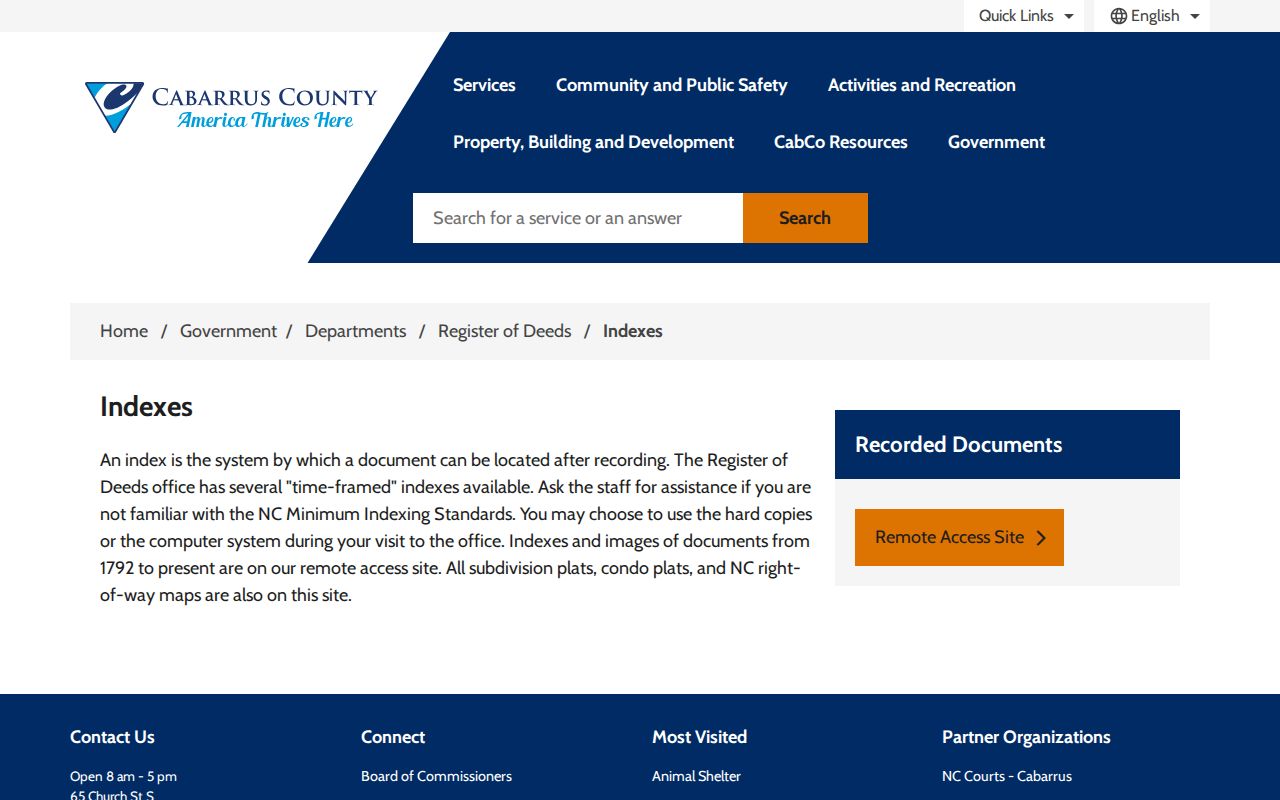
The index is a starting point for a document trail. A recorded image and its legal description are the pieces that connect a party name to the same land across time.
Trace Concord Previous Residents by Deed
A deed chain follows title backward, one transfer at a time. The grantor is the party conveying property, often the seller. The grantee is the party receiving it, often the buyer. A chain of title is the sequence of those transfers for the same parcel. Match the legal description, lot and block, subdivision, or prior book and page at every step, because a matching surname alone can point to another property.
- Use the current assessor record to save the owner or taxpayer, PIN or account, legal description, deed book and page, and last transfer details.
- Locate the current purchase deed in the Cabarrus Register of Deeds remote access site when an image is available, then note the seller, buyer, dates, instrument reference, and description.
- Search that seller as a grantee in the period before the current sale. The seller's earlier purchase is often the next link backward.
- Repeat the match through spouses, estate representatives, trustees, corporations, and reasonable spelling variants. Keep a separate note for every uncertain match.
- When a book or image is not online, use the office computer or hard-copy index, ask about a time-framed index, and consult Lore Room or NC Archives material where appropriate.
- Grantor
- The person or entity that conveys an interest in the land.
- Grantee
- The person or entity receiving that interest.
- Chain of title
- The linked sequence of recorded transfers for one parcel.
- Legal description
- The lot, block, subdivision, or boundary description that identifies land more reliably than an old street address.
Record any uncertainty rather than forcing a link. A trustee deed, estate transfer, or corporation name may need a probate file, an earlier instrument, or a plat before it can be placed in the same chain.
Concord Previous Residents Parcel Trails
Concord and Cabarrus use a formal uniform address system. City rules allow address changes to maintain sequential numbering, while county Addressing maintains the E911 and GIS master address database. That makes a current number a weak historical key. There is no verified citywide renumbering year to apply as a shortcut.
When an old address search fails, return to the parcel, deed book and page, lot and block, subdivision name, or road-name variant. Recorded plats can join a later street number to an older lot, phase, easement, or developer reference. Map Cabarrus also lets a researcher compare parcel details with zoning, district, and aerial layers, but the county says the map is not a legal source. Recorded deeds and plats control the land match.
Concord Past Residents in Directories
Land ownership is only part of the record. The located Concord directory run includes 1902, 1942, 1946, 1949, 1952, 1953, 1955, the 1957 telephone directory, 1959, 1962, and 1963-64. The complete shelf run still needs verification at the Lore Room. Baldwin volumes include a numerical householder directory and street guide, while the alphabetical entries may show a spouse, address, occupation, household marker, or widow notation.
For the source collections and how historical entries are read, use the Concord city directory. A directory is a publisher's snapshot rather than proof of every person at the property. OCR can also confuse initials, apostrophes, street abbreviations, and mill-community labels, so inspect the digitized page image when a match matters.
- Choose the directory closest to the date attached to the house or deed.
- Use its street or numerical householder section, then compare the alphabetical entry for the household detail.
- Pair 1902 with the 1900 or 1910 census, 1942 or 1946 with 1940 or 1950, and the 1950s volumes with the public 1950 census.
- Compare relationships, ages, place, and legal description before treating two similar names as the same household.
Concord Previous Residents Map Clues
Map Cabarrus provides historic aerial imagery back to 1938. It can show when a structure, road pattern, or surrounding landscape changed, but it does not name the people who lived there. The county map offers parcel details, adjacent-parcel browsing, and printable property details; compare its visual evidence with the deed chain rather than treating an aerial as proof of ownership.
The Library of Congress Concord Sanborn record begins with a verified 1885 item. Concord maps are also documented for 1887, 1892, 1897, 1902, 1906, 1911, 1921, 1927, and a 1927 edition updated to 1947. Sanborn sheets can show a footprint, stories, materials, and use, which helps date a building context before a deed or directory is read.
Concord Archives Complete Address Stories
For an owner or household trail that ends in a death, an obituary may supply a last residence, spouse, children, or date. Probate can identify heirs, an executor, and how a parcel was handled. An estate deed may then appear in the land chain. Check identity with more than one detail, especially when a name is common.
The North Carolina Archives county records guide describes the county-record groups that can add land, court, estate, tax, marriage, and will context to a Concord trail.
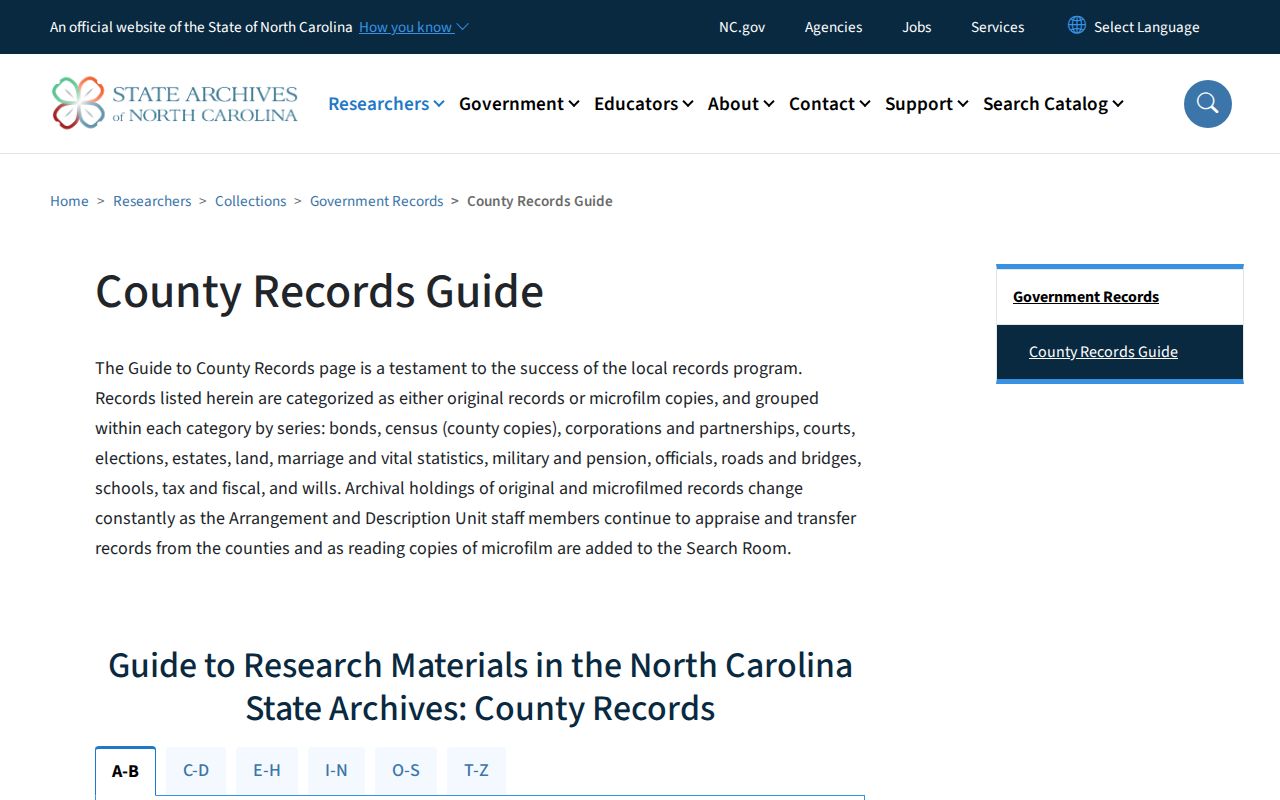
Archives material can corroborate a date or relationship, but a compiled index should lead back to the recorded document, census image, certificate, or probate file when available.
The Concord municipal cemetery page identifies Oakwood, Rutherford Memorial, and West Concord cemeteries. No public online name search was located, but city staff can help locate a purchased site or loved one by phone at 704-920-6380.
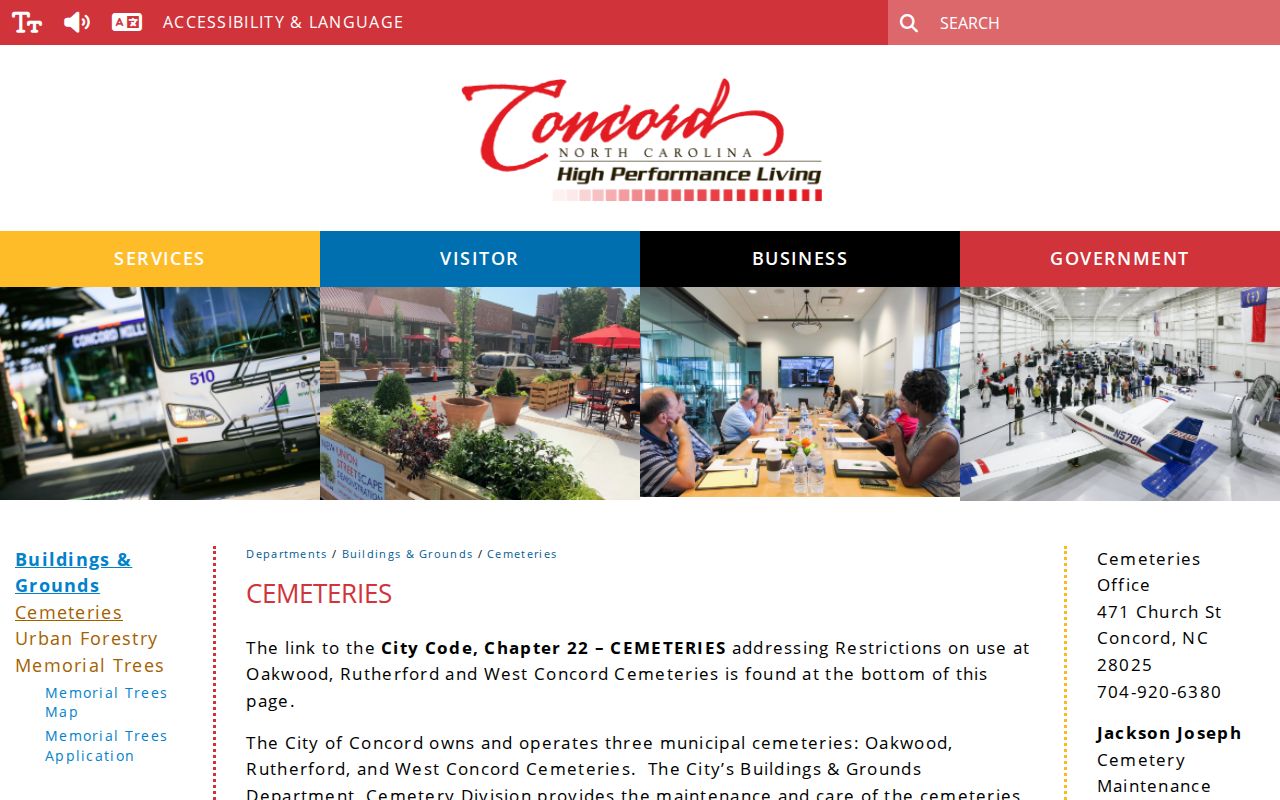
A cemetery response can be a useful endpoint for a house-history timeline, then an obituary, death record, or estate file can test the family connection.
Concord Lore Room House History
The Lore Room at the Concord branch is the local in-person bridge when online records stop. Its holdings date to 1750 and include deeds, wills, court minutes, tax lists, estate papers, county censuses, newspapers, family Bible records, and cemetery readings gathered in the Adelaide and Eugenia Lore Files. No standalone house-history guide was located. Call the Lore Room at 704-920-2061 to ask whether staff can identify a street-guide year, obituary folder, parcel-related item, or copying option.
Cabarrus County formed in 1792, the same starting year stated for the Register of Deeds index and image access. That unusually long span is valuable, but it does not remove the need to match legal descriptions carefully across changing road names and development patterns.
Note: Preserve the source date beside each address because the GIS, tax card, permit record, street list, and postal record may update at different times.
Concord Previous Residents: Careful Use
Previous residents research is best kept to family history, property history, estate questions, and personal curiosity. A deed holder is not automatically the person who occupied a home, and a historic directory entry is not a current contact record. Use only the details needed to test a historical connection.
Keep notes about the parcel and era, not a dossier about living people. When a record needs confirmation, return to the office or collection that holds the primary source.
Lawful use. North Carolina law prohibits stalking and harassment; do not use an address trail to watch, contact, intimidate, or harm a living person.